What does a 24-hour Unreal grind in Fortnite Reload actually require?
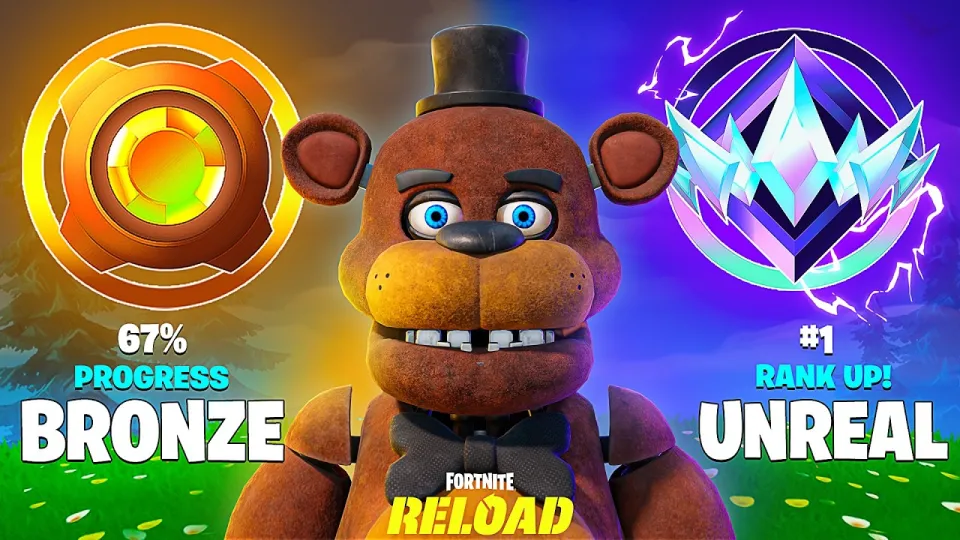
Video: I Played 24 HOURS for UNREAL! (Reload Speedrun on Day 1)
Need articles like this for your video? They help promote it on YouTube and Google — order them in the Telegram bot @sat_sit_bot. Articles with your video embedded are written and posted by the bot itself — on popular topical sites (no ads). Free trial — 50 articles.
· based on the channel TG Plays
Fortnite Reload is a fast respawn mode where squads fight over a compact map and can rejoin the fight after elimination, and its ranked ladder resets with each new season. That reset is the setup for the TG Plays video "I Played 24 HOURS for UNREAL! (Reload Speedrun on Day 1)", where the creator starts at the bottom of the ranked ladder and pushes toward Unreal in one continuous session. You can follow the creator's own Fortnite output through his Fortnite creator page, which lists the maps he and his studio publish.
What the 24-hour Unreal run in Fortnite Reload actually is
The run is a day-one ranked climb in Reload, not a standard Battle Royale grind. Ranks in Reload reset when the season rolls over, which means the first hours after a reset put everyone — casual players and top-tier competitors alike — back into the same low brackets. A creator with a fixed 24-hour window is racing that window as much as the ladder itself.
The format matters. Reload matches are shorter and more forgiving than a classic 100-player drop, because eliminated players can return to the map while their squad is still alive. More fights per hour means more rank movement per hour, which is exactly why a zero-to-Unreal sprint is plausible in Reload and far less plausible in standard ranked BR.
How Fortnite Reload ranked progression works
Reload ranked rewards consistent placement and eliminations across many short matches rather than one long survival run. The practical consequences for anyone trying to copy the run:
- Play with a full squad. Reload's respawn system only works while teammates are alive, so a coordinated four-stack keeps everyone in the match longer and stacks more elimination points.
- Treat every match as a volume play. Short games mean the ladder moves on aggregate performance, so avoiding early wipes matters more than chasing a single highlight.
- Expect the middle tiers to be the slowest. Early ranks climb quickly off strong individual games; the upper brackets demand consistent top placements against opponents who are also climbing.
- Watch the clock, not the rank bar. In a 24-hour format, sleep, queue times and losing streaks all eat the same budget.
Why day one of a rank reset is the best and worst time to climb
Day one is chaotic in both directions. On one hand, the lobby pool is diluted: players who normally sit in high brackets are back at the bottom, so early matches can be easier than the rank label suggests. On the other, that same dilution means the bracket you are climbing through is full of players with far better mechanics than their current tier.
That is the tension the video leans into. A reset creates a short window where a strong player can gain ranks fast, but it also creates a window where every match contains someone doing exactly the same speedrun. The further into the 24 hours the session goes, the more the lobbies sort themselves out and the closer the competition gets to the real skill ceiling of each bracket.
What viewers keep asking about the grind
The most common thread in the comments is difficulty: plenty of viewers say ranked feels harder this season than they remember, and that Fortnitemares-flavoured Reload lobbies are especially unforgiving. That matches the structure of a reset — everyone is re-climbing at once, so the low brackets are temporarily overstocked with strong players.
A second recurring theme is the marathon itself. Viewers fixate on how close the run gets to the finish line, and on the idea of a climb stalling at the very last percentage of a tier — the classic fear of any rank grind. The takeaway for anyone attempting this: the final stretch of a tier is where a single loss hurts most, so bank a buffer of points before pushing for the promotion.
A third theme is simply mode preference. Reload has become the go-to for players who want constant action instead of a slow Battle Royale pacing, and comments reflect that — the mode's shorter matches are why a one-day Unreal run is even a conversation.
How to run your own zero-to-Unreal attempt
If you want to try the same thing, the structure of the video is a reasonable template. Start at the reset, queue with people you can talk to, and set a hard stop so the session does not bleed into a second day of degraded play. Track your points per hour rather than your rank, because rank tiers lie early in a season and points per hour tells you whether the pace is actually sustainable.
Expect the middle of the climb to feel stuck. That is normal in any ranked ladder: the brackets where most of the population sits are the ones where wins are hardest to convert into fast progress. The players who finish a 24-hour push are usually the ones who keep their per-match floor high instead of chasing big individual games.
Useful links
- Creator page for Fortnite maps: https://www.fortnite.com/@TypicalGamer
- Studio page for JOGO builds: https://www.fortnite.com/@JOGO
- Community Discord: https://discord.gg/TypicalGamer
- Twitter: https://twitter.com/TypicalGamer
- Instagram: https://instagram.com/typicalgamer
The verdict on a one-day Unreal push
A 24-hour zero-to-Unreal run in Fortnite Reload is a volume game dressed up as a speedrun: short matches, a diluted day-one ladder and a squad that keeps respawning are what make the pace possible. The video's real lesson is that rank resets reward players who queue immediately and consistently, not players who wait for the ladder to settle. It also shows the cost — a full day of matches, and a final tier that can stall on a single bad game. The breakdown above is based on the TG Plays upload, and the creator's map catalogue is worth a look if you want to practise the same pace: Fortnite creator page for TypicalGamer.
Key takeaways
- Reload ranked ranks reset at the start of a season, so every player restarts from the bottom tier.
- The video's goal is a zero-to-Unreal climb inside a single 24-hour session on day one of the reset.
- Fortnite Reload is a faster respawn-based mode, so matches are shorter and rank points move quicker than in standard Battle Royale.
- The climb was streamed as a marathon, with the creator's own Fortnite maps promoted via fortnite.com/@TypicalGamer and fortnite.com/@JOGO.
- Viewers' main worry was difficulty: many comments call this season's ranked pool noticeably sweatier than before.
Source: I Played 24 HOURS for UNREAL! (Reload Speedrun on Day 1) · Markdown version
Questions & answers
How long does it take to reach Unreal in Fortnite Reload?
There is no fixed number, because rank points depend on placements, eliminations and the strength of your lobbies. In a reset season a strong squad playing short Reload matches can move several tiers in a single long session, which is why a 24-hour push is treated as plausible. Most players take far longer because they play a handful of matches at a time.
Is ranked Reload easier than standard ranked Battle Royale?
It moves faster rather than being strictly easier. Reload's respawn system and shorter matches give you more chances to score points per hour, but the opponents are the same pool of players. Many viewers note that ranked feels harder this season, largely because a fresh reset packs strong players into low brackets.
Why do ranks reset in Fortnite Reload?
Ranked ladders in Fortnite are seasonal, so tiers reset when a new season begins and everyone re-climbs from the bottom. That gives returning and new players a shared starting line and makes day-one climbing a distinct challenge, since the bracket population is temporarily mixed by skill.
What is the best way to climb fast after a rank reset?
Queue with a full squad you can communicate with, play a high volume of short matches, and protect your per-match floor instead of chasing highlight games. Start early in the reset while lobbies are still sorting out, and set a stopping point so fatigue does not turn a good session into a losing streak.